
The First Amphibious Landing of the Marines, March 3, 1776
POSTED ON: Monday, March 9, 2026 12:00 AM by Jennifer Bryan
On the afternoon of March 3, 1776, a force of 234 American marines and 50 sailors from Commodore Esek Hopkins's Continental Navy fleet splashed ashore on New Providence Island in the Bahamas to seize the British king's gunpowder and other "warlike stores" at Nassau, the seat of royal government in the islands. Captain Samuel Nicholas, recipient of the first marine commission, led his men around a deep cove on a path between the water and a "prodigious thicket" toward Fort Montagu, which guarded the eastern approach to Nassau. The Americans took the fort without firing a shot, encamped there for the night, and the next day marched through the town to Fort Nassau, which they entered with no opposition. Although the island's governor had managed, under cover of darkness, to send most of the gunpowder to St. Augustine aboard a sloop and a Royal Navy schooner, the Americans captured nearly 90 cannon, 15 mortars, more than 5,000 shells, more than 1,000 round shot, and other materiél of great value to the Continental Army.
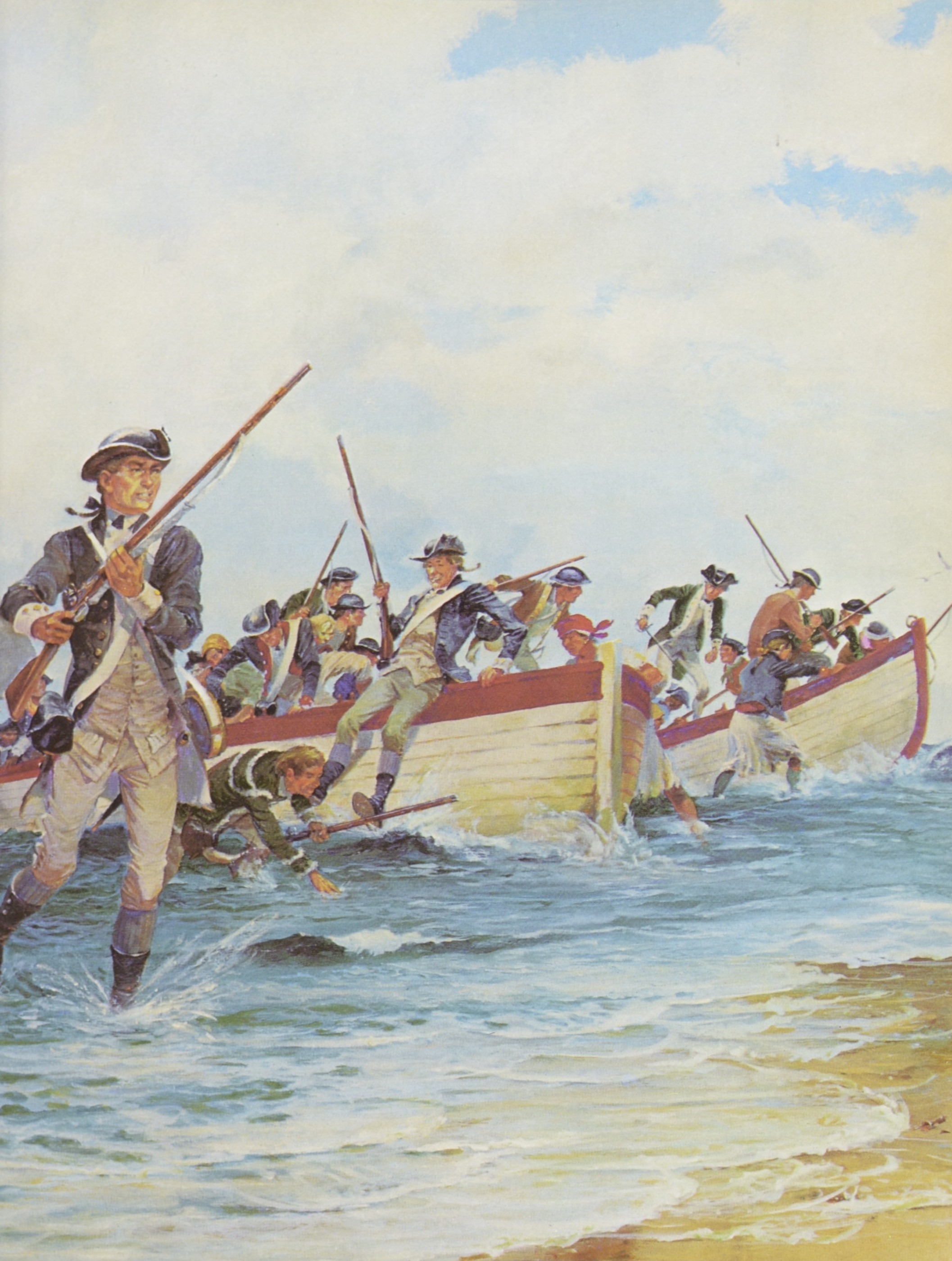
Detail of "Landing at New Providence, 3 March 1776" by Col. Charles H. Waterhouse, USMCR (Ret.) from Charles R. Smith, Marines in the Revolution: A History of the Continental Marines in the American Revolution 1775-1783, Washington, D.C., 1975.
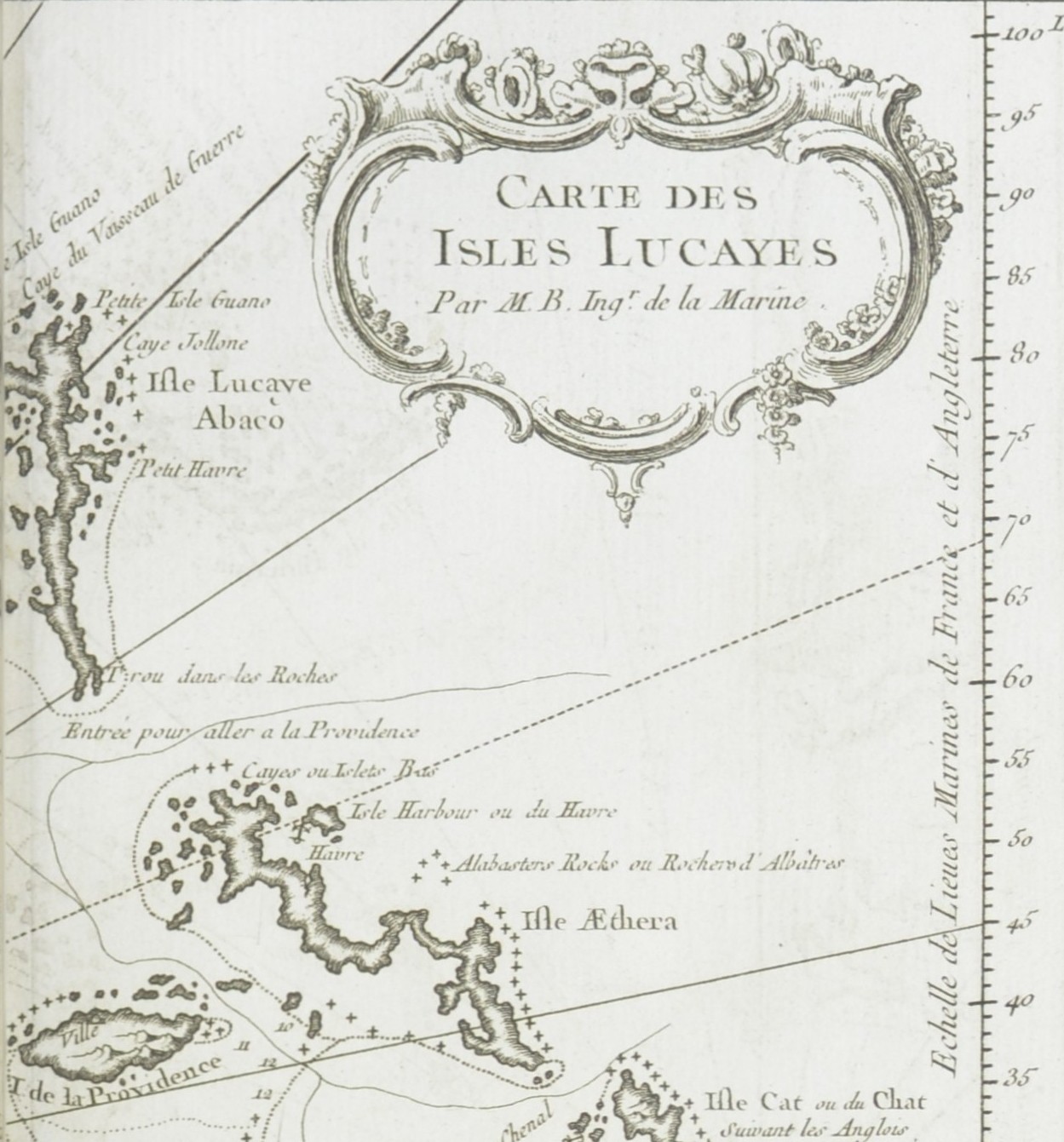
Detail of "Carte des Isles Lucayes" from Jacques Nicolas Bellin, Le petit atlas maritime, Paris? 1764.
The American fleet, consisting of Hopkins's flagship Alfred, ship Columbus, brigs Andrew Doria and Cabot, sloops Providence and Hornet, and schooners Wasp and Fly, had sailed from Cape Henlopen on February 17 to rendezvous at Abaco Island in the Bahamas. All the vessels arrived there on March 1 except Hornet and Fly, which separated from the rest in a storm two days into the voyage. Capturing two sloops from New Providence, the Americans learned that the island was lightly defended and that a stock of gunpowder, a commodity that the Continental Army sorely needed, was stored in the two forts that guarded Nassau harbor. With this information, Commodore Hopkins decided to launch an expedition against the island. He transferred the marines to the two sloops, where they were to remain below deck until the vessels had anchored in the harbor, then the marines would land and take the forts by surprise. The execution of this plan hinged on the fleet remaining out of sight; unfortunately, all the ships came within view of the town and a warning gun alerted Hopkins that the element of surprise had been lost.
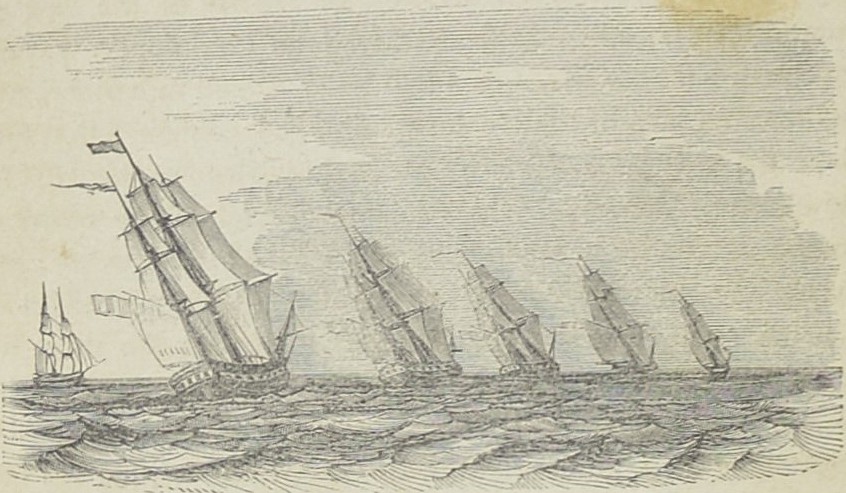
James Hamilton's illustration "Sailing of the Squadron" from Benjamin Walker, ed., Life of Rear-Admiral John Paul Jones, Chevalier of the Military Order of Merit, and of the Russian Order of St. Anne, &c. &c., Philadelphia, 1845.
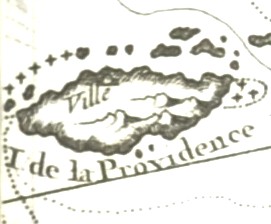
New Providence Island, enlarged from Bellin's chart.
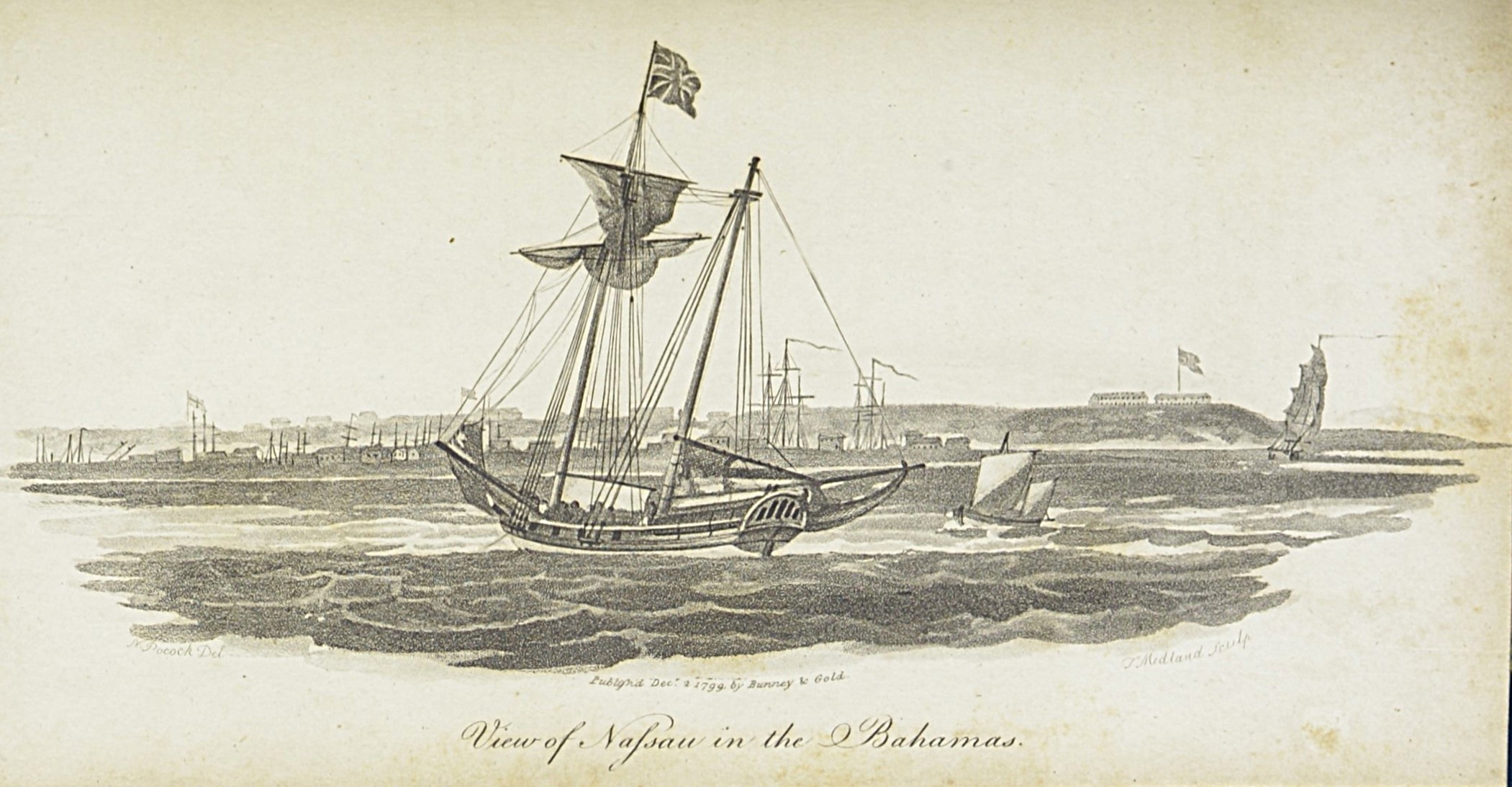
"View of Nassau in the Bahamas" from The Naval Chronicle, 1799.
Moving the fleet to an anchorage at Hanover Sound, a few leagues from Nassau harbor, Hopkins sent Wasp, Providence, and the two captured sloops to the east end of the island where the Continental Marines made their first amphibious landing on the afternoon of March 3. Fort Montagu, a small stone fort guarding the eastern end of Nassau harbor, stood about halfway between the landing place and the town. Captain Samuel Nicholas drew up his men and prepared to march on the fort. Governor Montfort Browne sent a message to Nicholas, asking what were his intentions. "I sent him for answer, to take possession of all the warlike stores on the Island belonging to the Crown, but had no design of touching the property or hurting the persons of any of the inhabitants, unless in our defence." As the American forces approached the fort, the defenders withdrew after firing three cannon, which did no damage nor prevented Nicholas from occupying Fort Montagu "in which were found seventeen pieces of cannon, (thirty-two, eighteen, and twelve pounders,) and not much damaged; they were spiked with nails and spikes, which are easily taken out." Nicholas decided to stay at the fort that evening "and refresh my men, who were fatigued, being on board the small vessels, not having a convenience either to sleep or cook in."
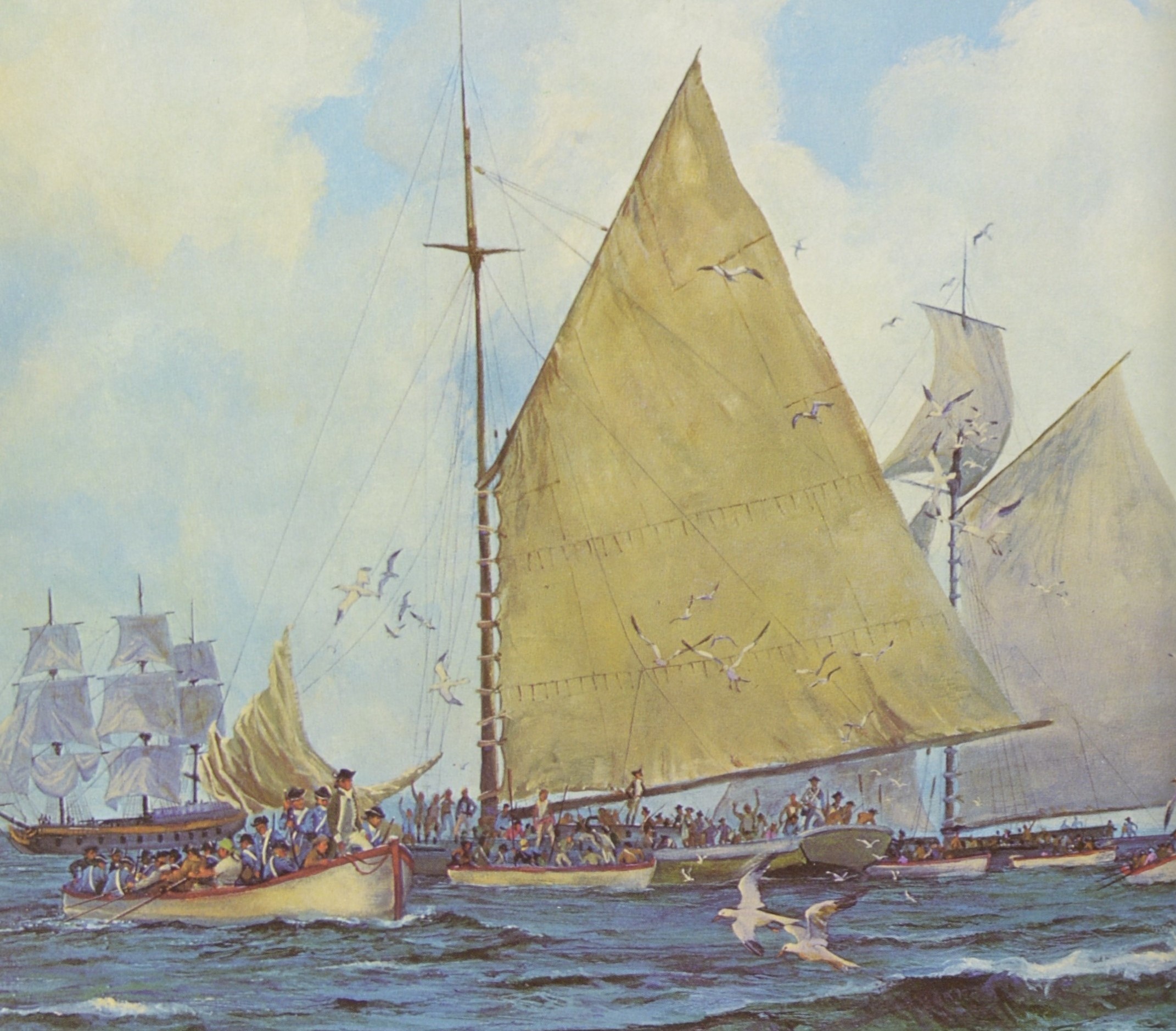
Enlarged detail of "Landing at New Providence, 3 March 1776" by Col. Charles H. Waterhouse, USMCR (Ret.).
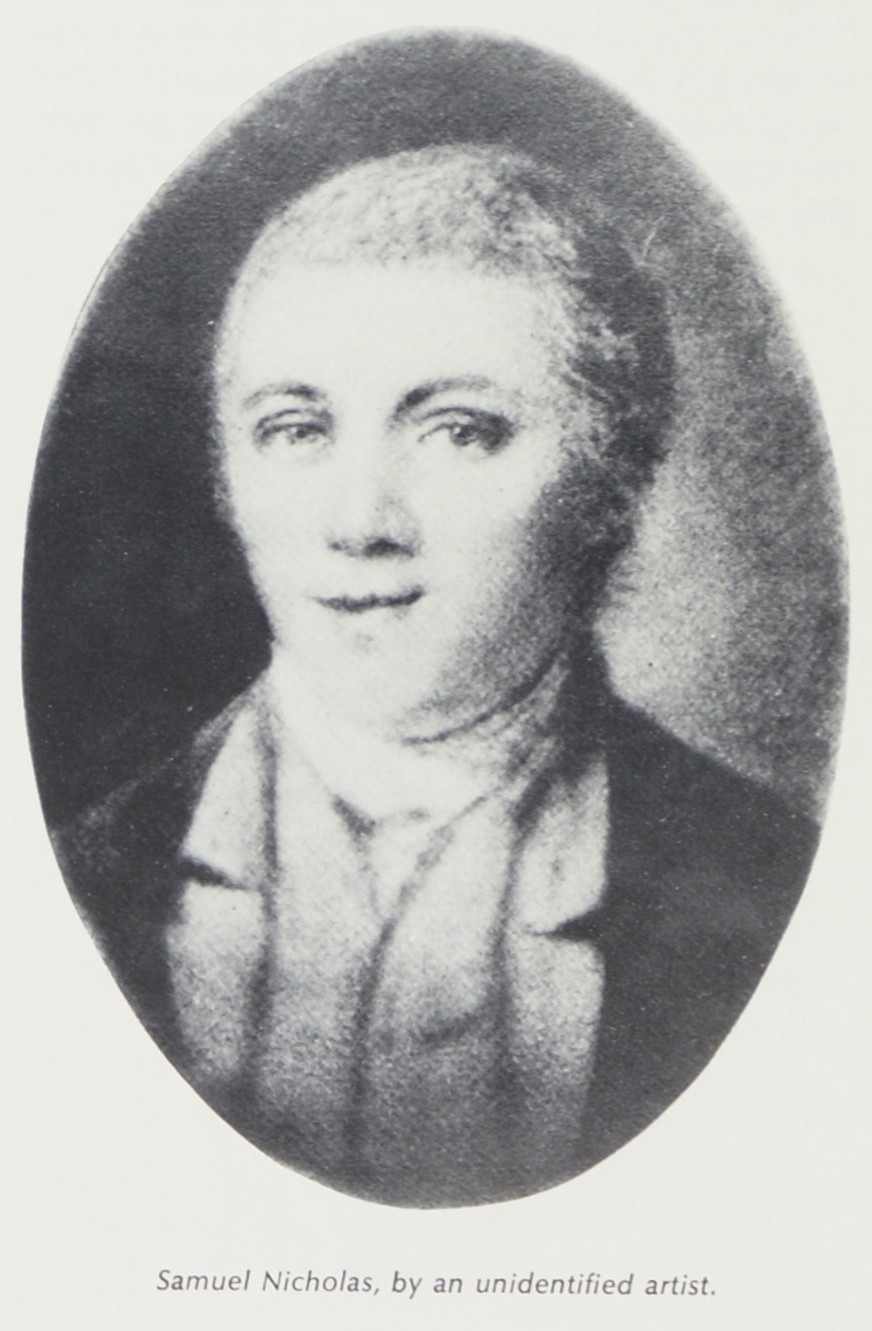
Samuel Nicholas (1744-1790) from Charles R. Smith, Marines in the Revolution: A History of the Continental Marines in the American Revolution 1775-1783, Washington, D.C., 1975.
In the evening, Commodore Hopkins learned that there were around 200 inhabitants in Fort Nassau, at the western end of the harbor. "I then caused a Manifesto to be published the Purport of which was (that the Inhabitants and their Property should be safe if they did not oppose me in taking possession of the Fort and Kings Stores) which had the desired effect for the Inhabitants left the Fort almost alone--Captn Nicholas sent by my Orders to the Governor for the Keys of the Fort which was delivered and the Troops march'd directly in where we found the several Warlike Stores...but the Governor sent 150 barrels Powder off in a Small Sloop the night before." Hopkins could have prevented the Mississippi Packet accompanied by H.M. Schooner St. John from escaping with the bulk of the gunpowder if he had closed the main entrance to Nassau harbor with some of his ships. In keeping his ships and brigs at anchor in Hanover Sound with Wasp, Providence, and the two captured sloops off Fort Montagu, Hopkins lost the main prize of the expedition.
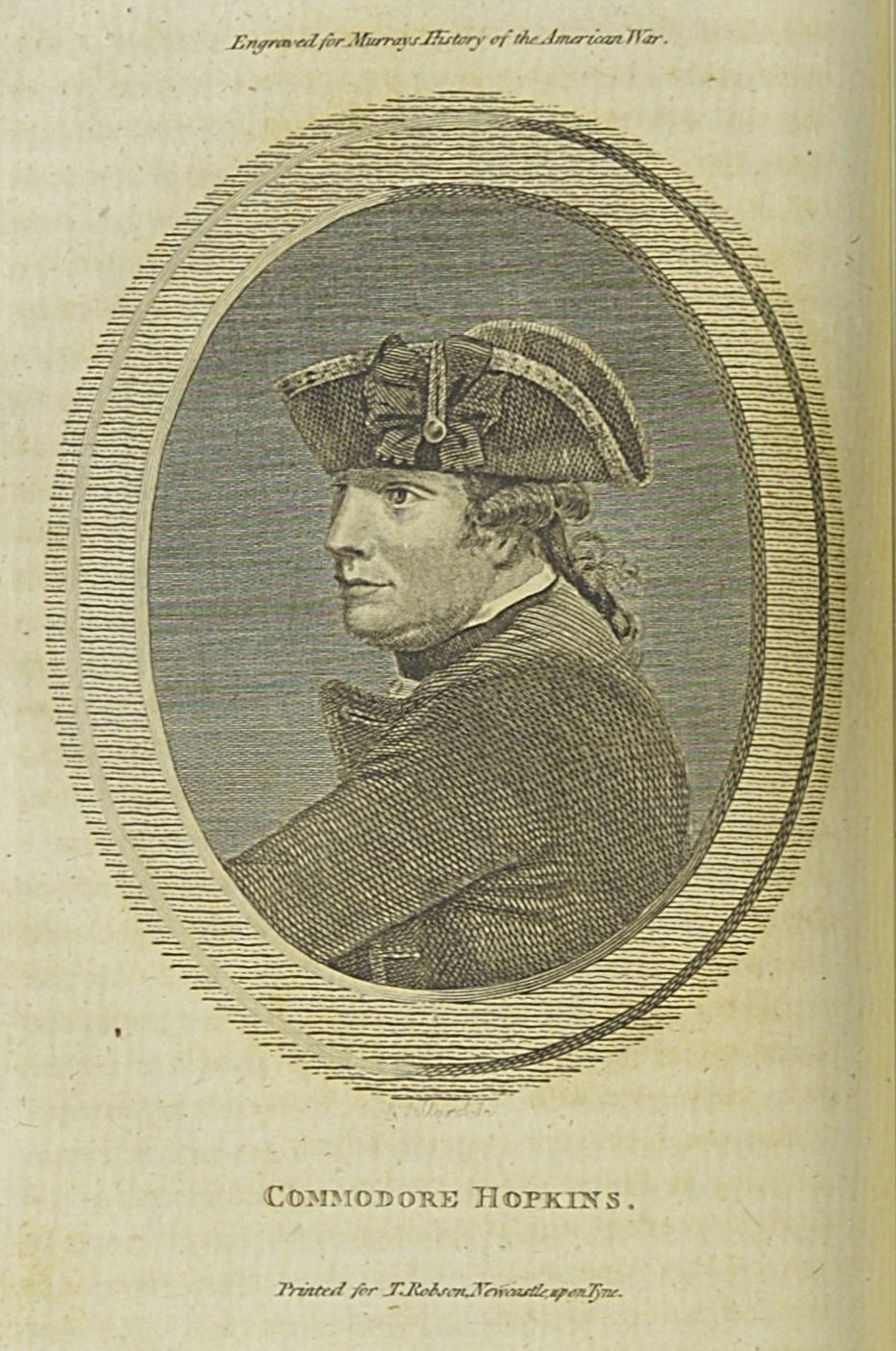
Esek Hopkins (1718-1802) from James Murray An Impartial History of the Present War in America, Newcastle upon Tyne, 1779-1780.
After the Americans had possession of Fort Nassau, the fleet sailed into the harbor on March 6 and the cannon and other warlike stores were loaded aboard the vessels. Although Governor Browne had sent away most of the gunpowder, there remained 24 casks. Commodore Hopkins took into service the sloop Endeavour to carry some of the cannon. Having loaded all the cannon and stores, the fleet sailed from New Providence on March 16 with Governor Browne, the Governor's secretary Lieutenant James Babbidge, and Thomas Irving "late belonging to the American Board of Customs" as prisoners. The Continental Marines, born on November 10, 1775, had executed their first successful amphibious raid.
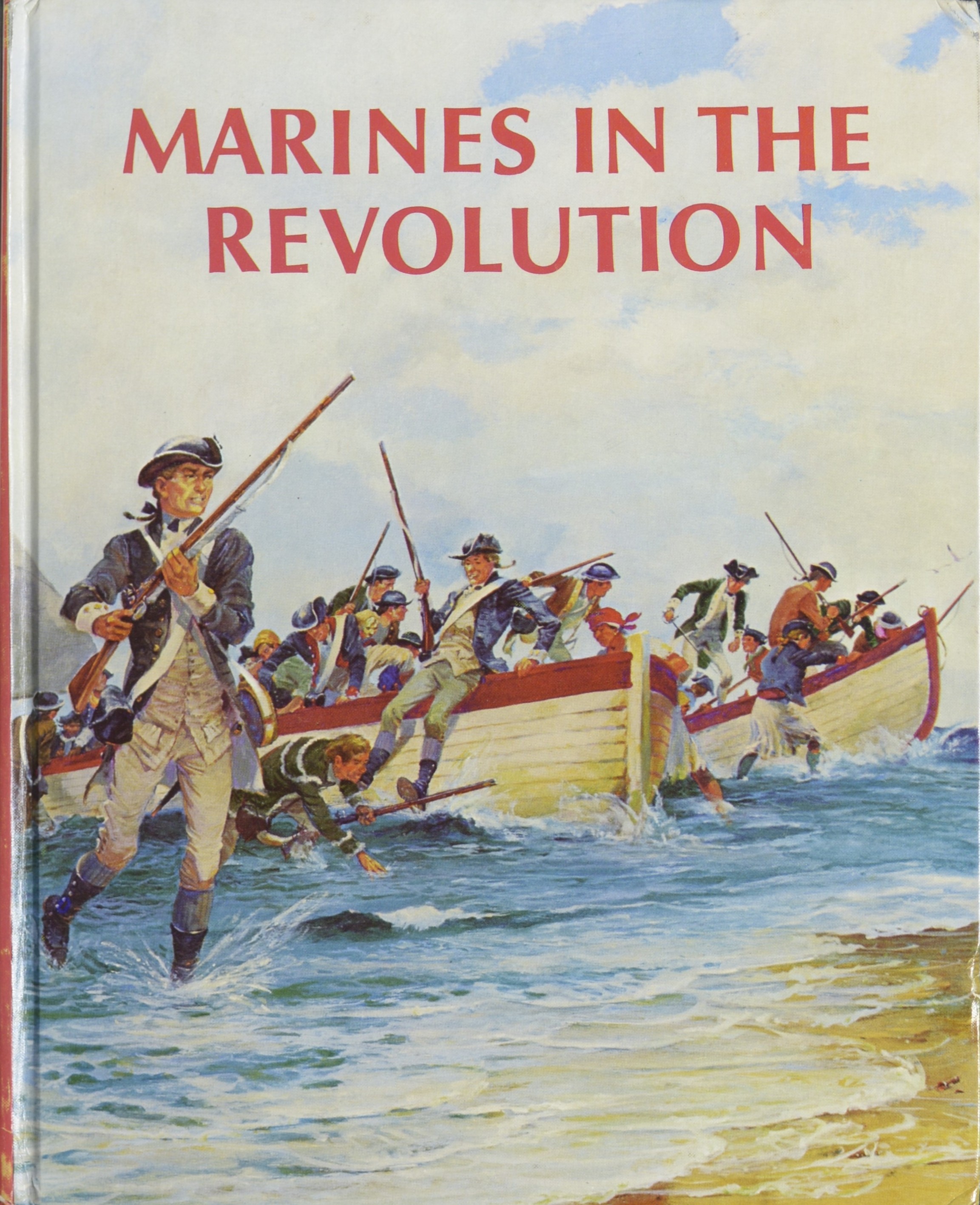
Cover of Charles R. Smith, Marines in the Revolution: A History of the Continental Marines in the American Revolution 1775-1783, Washington, D.C., 1975 featuring the landing at New Providence.
__
About the author: Dr. Jennifer Bryan is the Head of Special Collections & Archives/Archivist, Nimitz Library, United States Naval Academy.
__
Sources:
Clark, William Bell, William James Morgan, and Michael J. Crawford, eds. Naval Documents of the American Revolution. 13 vols. Washington: Naval History Division, Department of the Navy, 1964-2013. E271.U583
Jones, John Paul. Life and Correspondence of John Paul Jones, including His Narrative of the Campaign of the Liman. Edited by Robert Charles Sands. New York, 1830. E207.J7 J638 1830
Smith, Charles R. Marines in the Revolution: A History of the Continental Marines in the American Revolution 1775-1783. Washington, D.C.: History and Museums Division, Headquarters, U.S. Marine Corps, 1975. E271.S46
Category: