
Aviation training at USNA turns 100
POSTED ON: Wednesday, May 27, 2026 12:00 AM by Adam Minakowski
The U.S. Naval Academy’s class of 2026 that graduated and commissioned last week became the one hundredth class to receive some form of required aviation training. This does not mean that 1926 was the beginning of Naval aviation in Annapolis, nor does it mean the midshipmen of the class of 1926 were the first trained to fly. However, it was the first time the entire class experienced aviation instruction as a requirement.
In one sense, Naval aviation had a long history in Annapolis. Greenbury Point, across the Severn River from the academy, was the site of the first Naval air station in 1911 and the location of many experiments and firsts in flight. These activities, however, were conducted by the Navy and didn’t necessarily involve the midshipmen. Nevertheless, aviation and its military applications were topics of discussion at the academy throughout the 1910s and 1920s, and as flying developed, its concepts and principles were incorporated into the curricula of various academic departments.
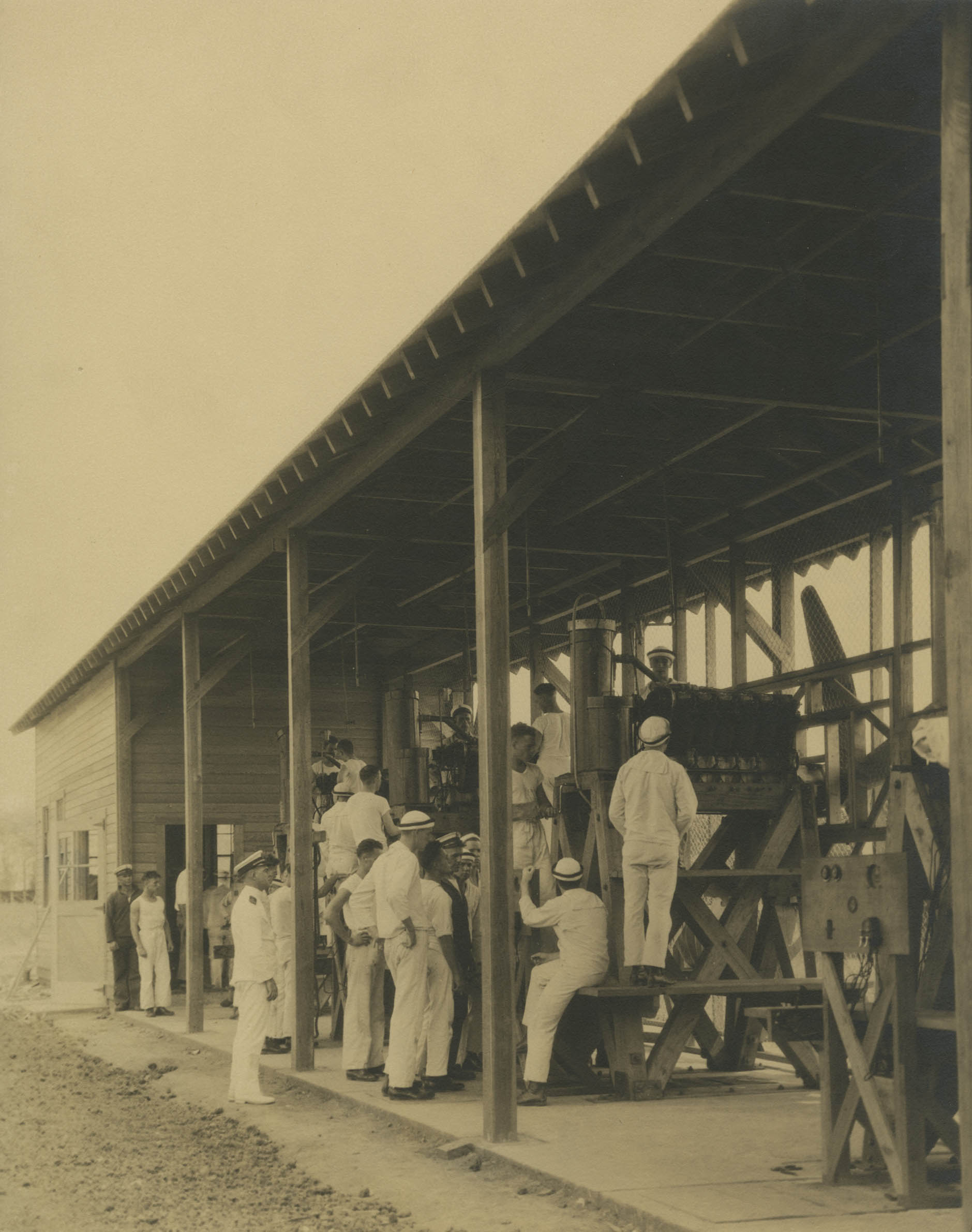
By 1923, the Navy’s Bureau of Navigation, in a letter to all officers, noted the increasing importance of aviation in commercial transportation around the world, and “with regard to the military requirements for a national defense, it has become an essential arm of the land and sea forces.” The purpose of the letter was to recruit prospective aviators for an eight-month class in Pensacola, Florida, the following year. The Bureau of Aeronautics and its chief, Rear Admiral William A. Moffett in particular, wanted to go farther. First the bureau offered to send instructors from Pensacola to the ships carrying midshipmen on their summer cruise to deliver a series of lectures on aviation. When the offer was rejected, Moffett, an 1890 graduate of the academy, doubled down and suggested adding nine aviation-related subjects to the regular curriculum at his alma mater. His purpose seemed to be two-fold. First, he considered it “essential that all officers of the Navy gain aviation knowledge in order that they may understand and appreciate aircraft problems and the limitations and capabilities of aircraft.” Second, he believed “such instruction will stimulate thought among the younger officers of the Navy and materially assist in the development of aviation.”
But regardless of the reasoning, academy officials resisted his efforts to add aviation training to the midshipmen’s plates. The easy out was to point to the already jam-packed curriculum at Annapolis. The summer cruise lectures came too late to be included in the cruise instructional booklets, and the academy’s academic departments balked at dedicating the 29 total class periods to Moffett’s proposed aviation subjects. And the academy could also point to the ways it already was teaching some of what Moffett wanted. The academy superintendent’s response to Moffett’s suggestion included memos from department heads listing the topics previously incorporated.
It seemed the crux of the issue, however, was whether aviation was a fundamental topic for all Naval officers or a specialty for those interested in that military community. The superintendent, Admiral Henry B. Wilson, responded to the request for summer cruise lectures by saying, “the mission of the Naval Academy requires the teaching of fundamentals only [with] no room for the teaching of specialties.” He added that “we have no destroyer course, or submarine course, or light cruiser course, and I am firmly of the belief that there should be no aviation course.” Moffett’s response to this view was that “certain phases of aviation subjects are as fundamental as are many of the subjects which are taught at present,” and “although no destroyer, battleship or submarine courses are included in the Naval Academy curriculum, the fundamentals in regard to the construction, equipment, and operation of each type are included.” Wilson circulated the idea of aviation instruction with the academy’s academic departments, and as late as January 1925 - only 6 months before aviation training began - the faculty mostly agreed with the superintendent. So while aviation training may have been a familiar topic for more than a decade at the academy, in another sense, its implementation came together quite quickly and suddenly.
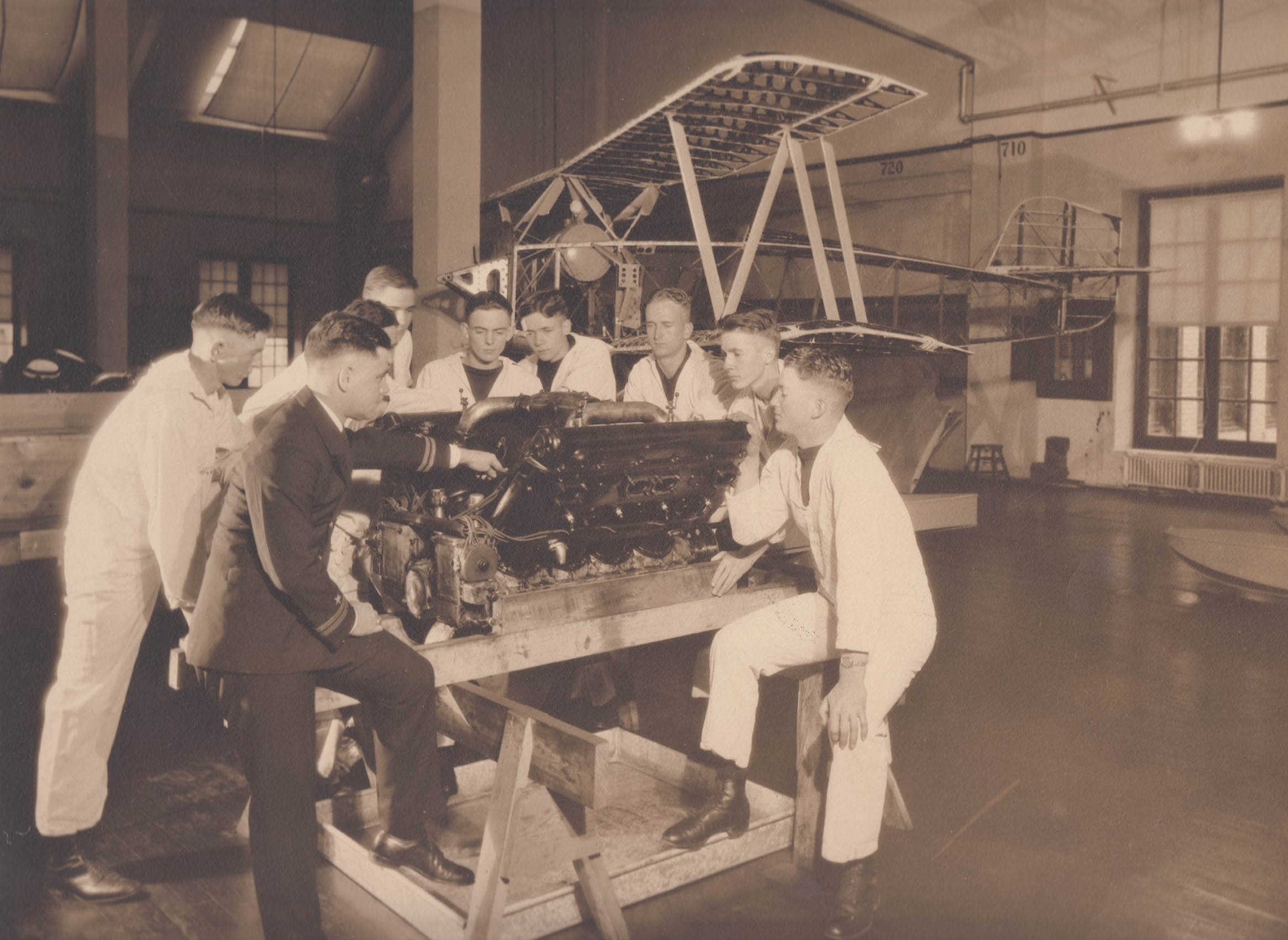
A major reason for the sudden reversal was a change of superintendent. In February 1925, Rear Admiral Louis Nulton succeeded Wilson, and a 1945 history of Naval Academy aviation attributed Nulton’s interest in reexamining the topic to his familiarity with aircraft during his prior service in the fleet. The Bureau of Navigation also supported the effort and, in May 1925, proposed not only adding aviation topics to the regular curriculum and intensive, three-month training over the summer, but also renaming the academy’s engineering and seamanship departments the Department of Engineering and Aeronautics and the Department of Seamanship and Flight Tactics respectively.
As it turned out, aviation instruction at the academy mostly followed the bureau’s proposal. Half of the class of 1926 received three months of theoretical and practical instruction during the summer of 1925 in lieu of its annual summer cruise with the other half getting the same training following graduation in the summer of 1926. The entire class received further theoretical instruction during the regular 1925-26 academic year. During both summers, the academy added tours of a naval aircraft factory in Philadelphia.
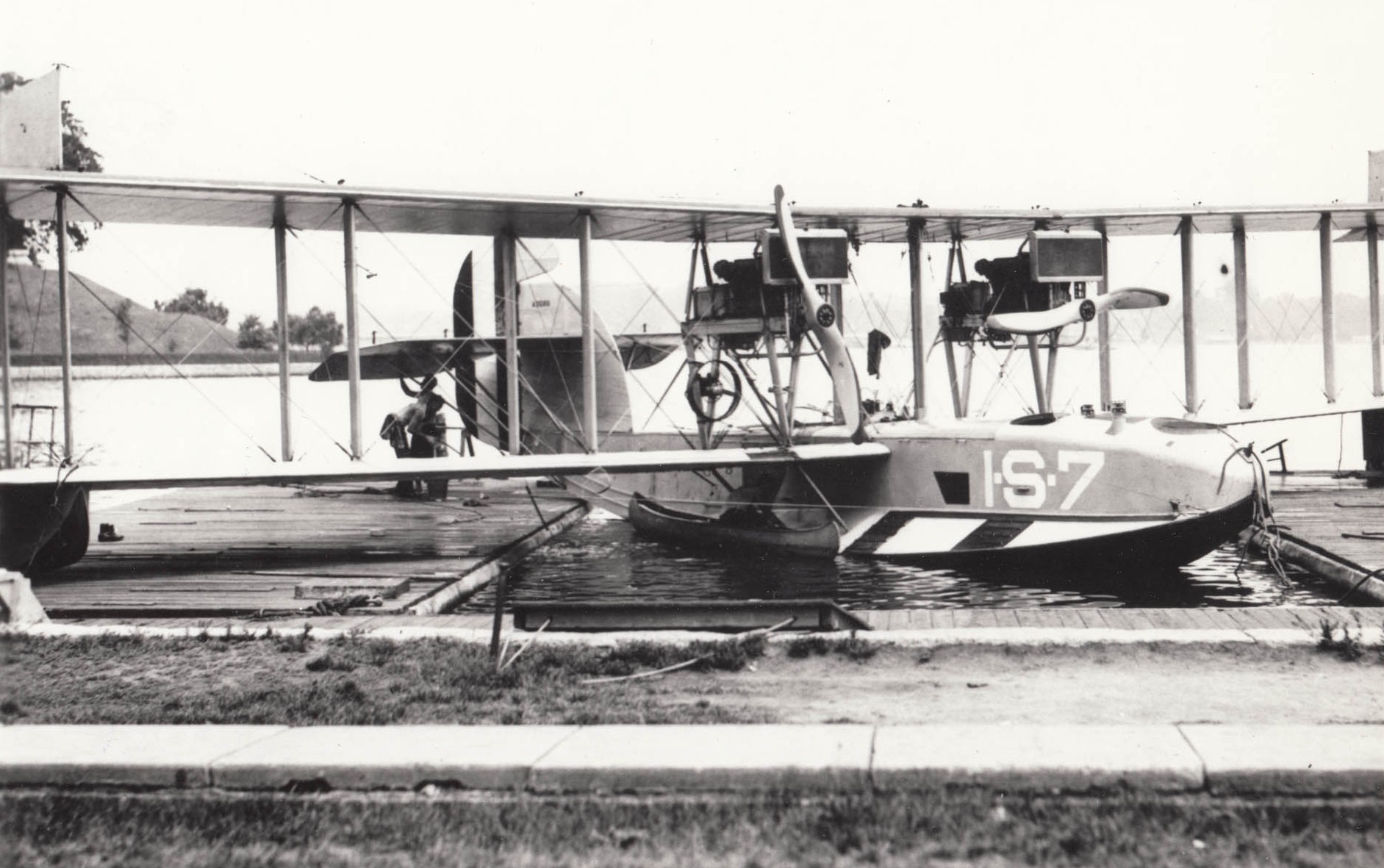
The academy would also deviate from the Bureau of Navigation’s proposal in subsequent years when it incorporated the lessons learned from instructing the class of 1926. The bureau envisioned entire classes of 600 midshipmen taking the summer course following graduation. However, the summer of 1926 demonstrated that “three hundred students is the saturation capacity of the Academy for aviation instruction during the summer,” according to Nulton. Part of the problem was overcrowding and the lack of supervision at the academy with a new class of plebes joining the graduated trainees and fewer officers present due to summer cruises and usual rotation of assignments. The other problem was the amount of equipment, especially planes, and training officers needed in Annapolis to get the entire class through the summer course.
The solution to these issues, at least for the class of 1927, was to move all theoretical or “ground school” instruction into the academic year, which reduced the practical summer course to five weeks and allowed half the class to take the course early in the summer and the other half later in the summer. The Bureau of Navigation also established a Naval Air Detail to supply the needed instructors and equipment during the summer.
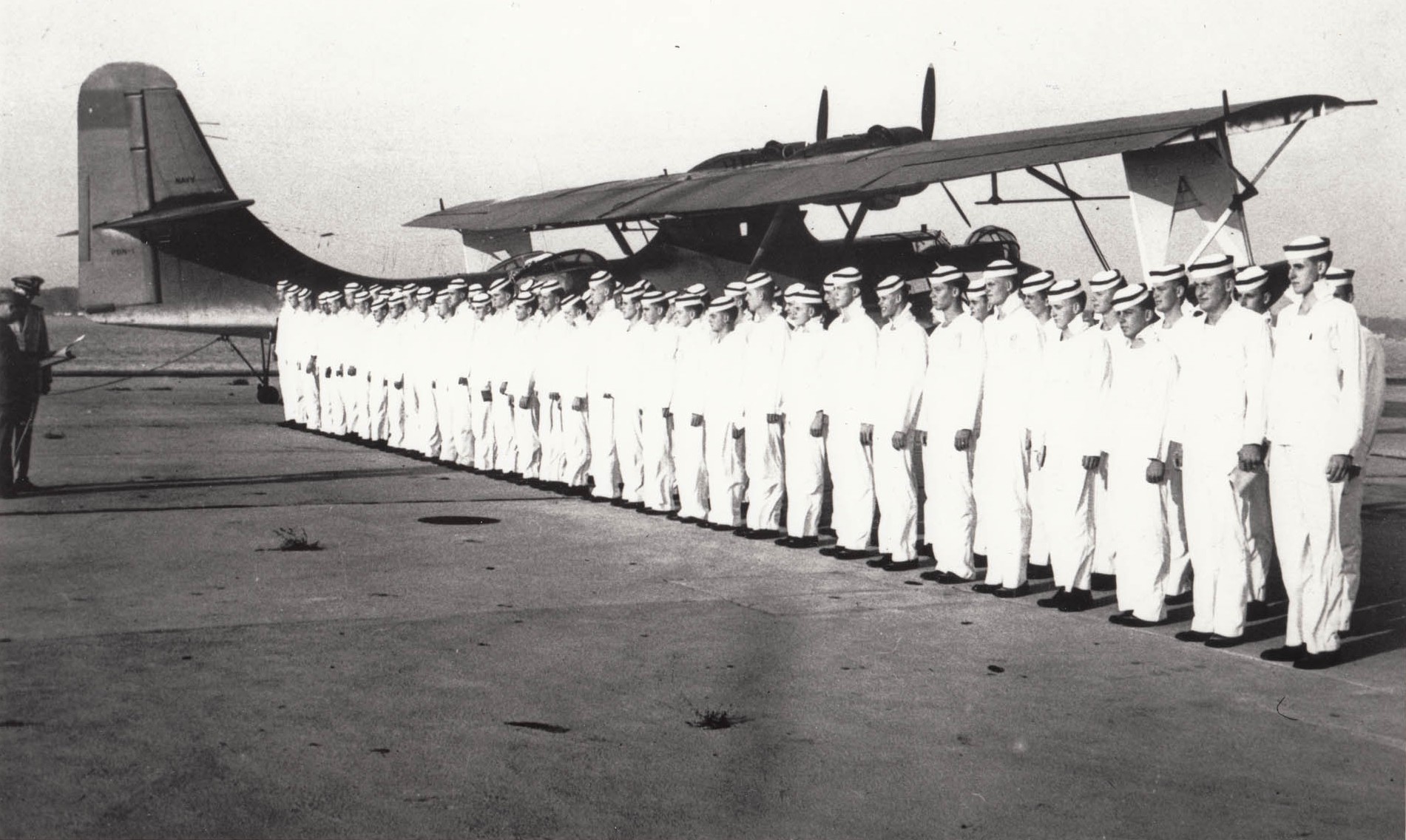
Further refinements and changes would regularly occur in the coming decades as there never seemed to be enough planes and instructors available and the academy’s curriculum underwent significant change. A Department of Aviation would be created and later split up into other departments. Practical training in Annapolis would be increased and later moved to other sites when operations transferred to Andrews Air Force Base and elsewhere. However, aviation training continued in some form during the summer for the next 100 years and counting.
About the author: Adam Minakowski is an Assistant Archivist in the Special Collections & Archives Department, Nimitz Library, United States Naval Academy.
Sources:
“Department of Aviation/Aviation Instruction, Field Trip to Aircraft Factory in Philadelphia, 1925, 1926.” Education and Training, Box 1. Office of the Superintendent/Correspondence: General Correspondence, RG 405.2.1 Entry 39b. Special Collections & Archives Department, Nimitz Library, United States Naval Academy
“Department of Aviation/Aviation Instruction, General Correspondence, 1925-1939.” Education and Training, Box 1. Office of the Superintendent/Correspondence: General Correspondence, RG 405.2.1 Entry 39b. Special Collections & Archives Department, Nimitz Library, United States Naval Academy
“Department of Aviation/Beginning of Aviation Instruction Correspondence, 1923-1925.” Education and Training, Box 1. Office of the Superintendent/Correspondence: General Correspondence, RG 405.2.1 Entry 39b. Special Collections & Archives Department, Nimitz Library, United States Naval Academy
“History of Aviation at USNA.” Support Facilities, Box 1. Office of the Superintendent/Correspondence: General Correspondence, RG 405.2.1 Entry 39b. Special Collections & Archives Department, Nimitz Library, United States Naval Academy
“NAF/Establishment/Training and Requirements.” Support Facilities, Box 1. Office of the Superintendent/Correspondence: General Correspondence, RG 405.2.1 Entry 39b. Special Collections & Archives Department, Nimitz Library, United States Naval Academy
Category: History, Special Collections & Archives