
Washington's Birthday Observed
POSTED ON: Thursday, February 12, 2026 12:00 AM by Jennifer Bryan
For George Washington's 294th birthday (celebrated on February 16 this year thanks to the Uniform Monday Holiday Act of 1971), we feature several illustrations from the Reverend John Frederick Schroeder's two-volume Life and Times of Washington. The Naval Academy Library acquired this work when it was published in the late 1850s.
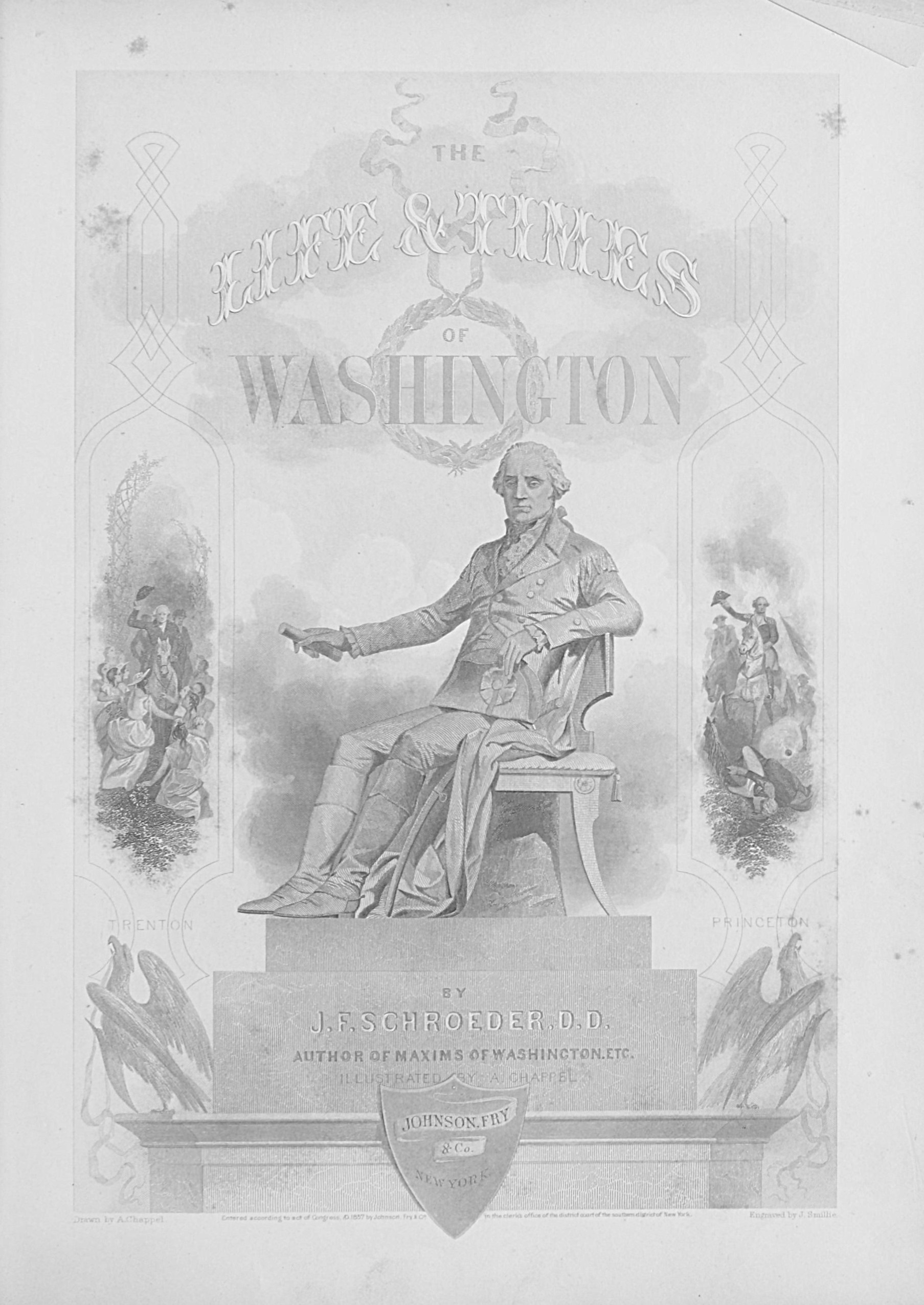
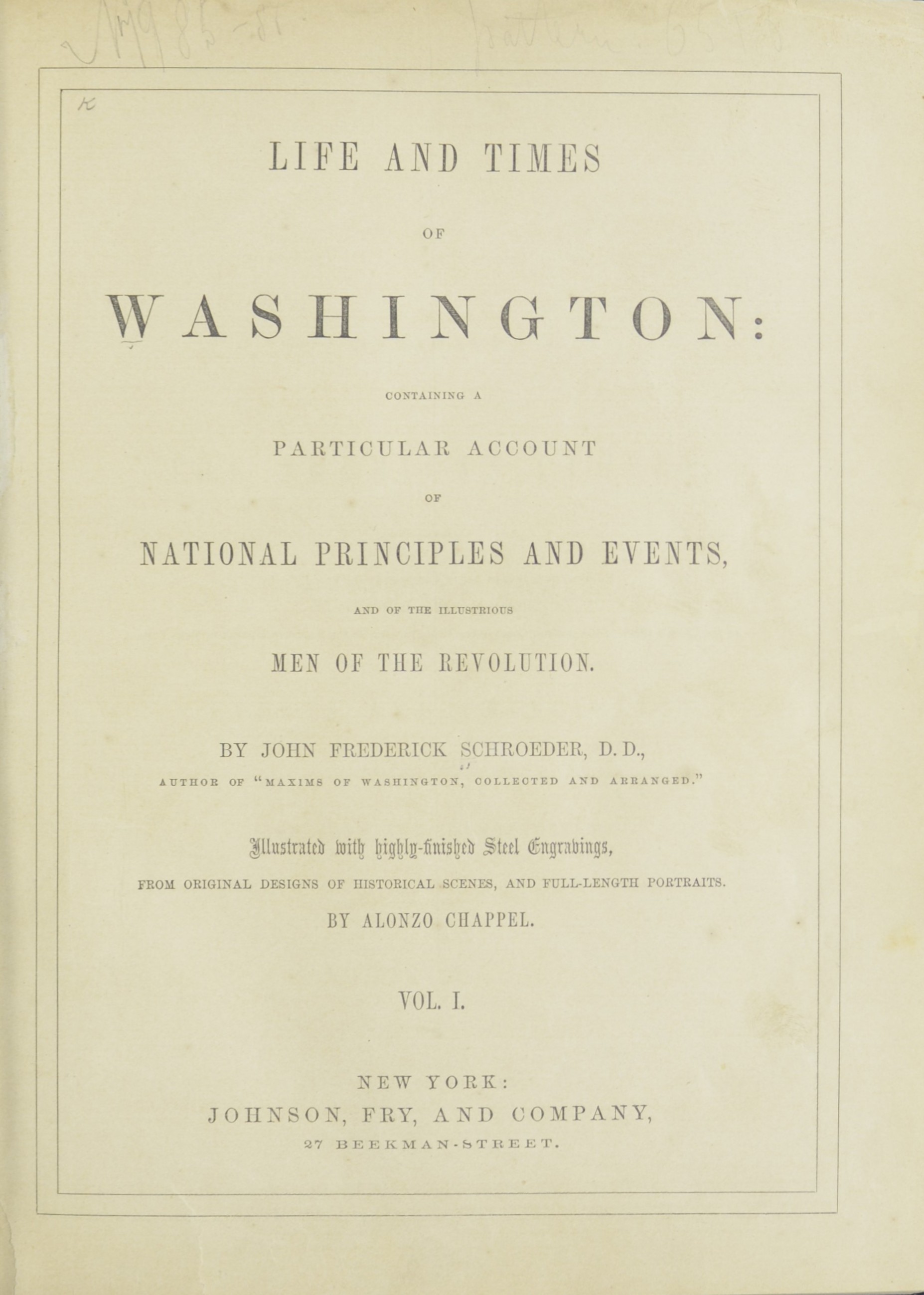
The author was born in Baltimore in 1800, graduated from Princeton in 1819, and was ordained in 1823. From 1824 to 1838, he served as assistant minister of Trinity Church in New York. Among his modest literary output was another work about George Washington, Maxims of Washington, published in 1854. According to bibliographer Joseph Sabin (1821-1881), publisher Johnson, Fry, and Company originally issued Life and Times of Washington in 46 parts at 25 cents each. The Reverend Schroeder died in Brooklyn on February 26, 1857, when the fourth part was in the press.
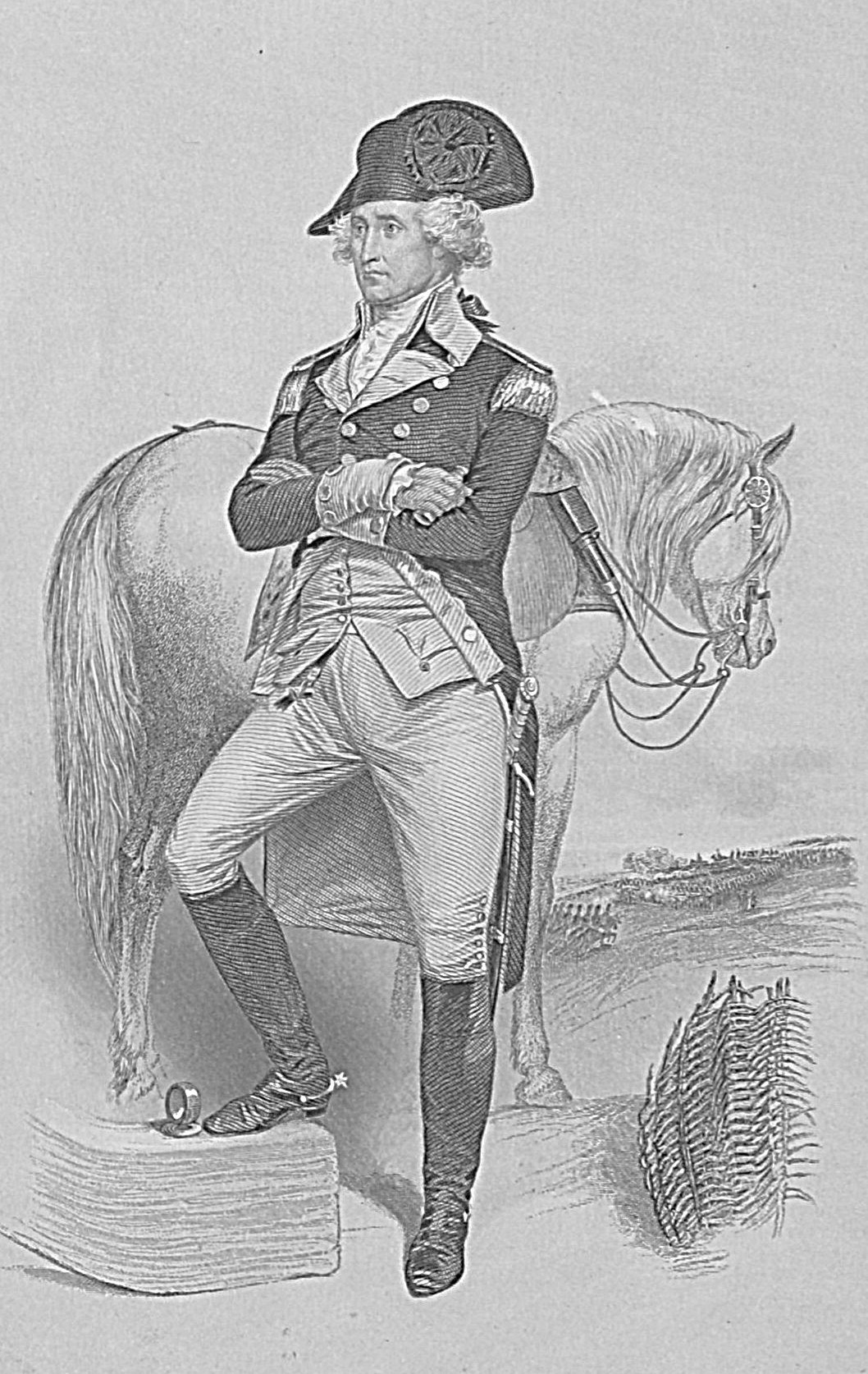
"Washington in 1775. The Period of His Taking Command of the Army."
The steel engravings in the work are "from original designs of historical scenes and full-length portraits by Alonzo Chappel." Chappel (1828-1887) had been introduced to publisher Henry J. Johnson, who offered the artist the opportunity to design the illustrations for Schroeder's Life and Times of Washington. Johnson, Fry, and Company was a leading publisher of gift-books, lavishly illustrated volumes made possible through technological innovations in engraving and lithography. Chappel continued until 1885 to produce artwork for the firm, which hired skilled engravers to transfer his designs to printing plates for reproduction in its books.
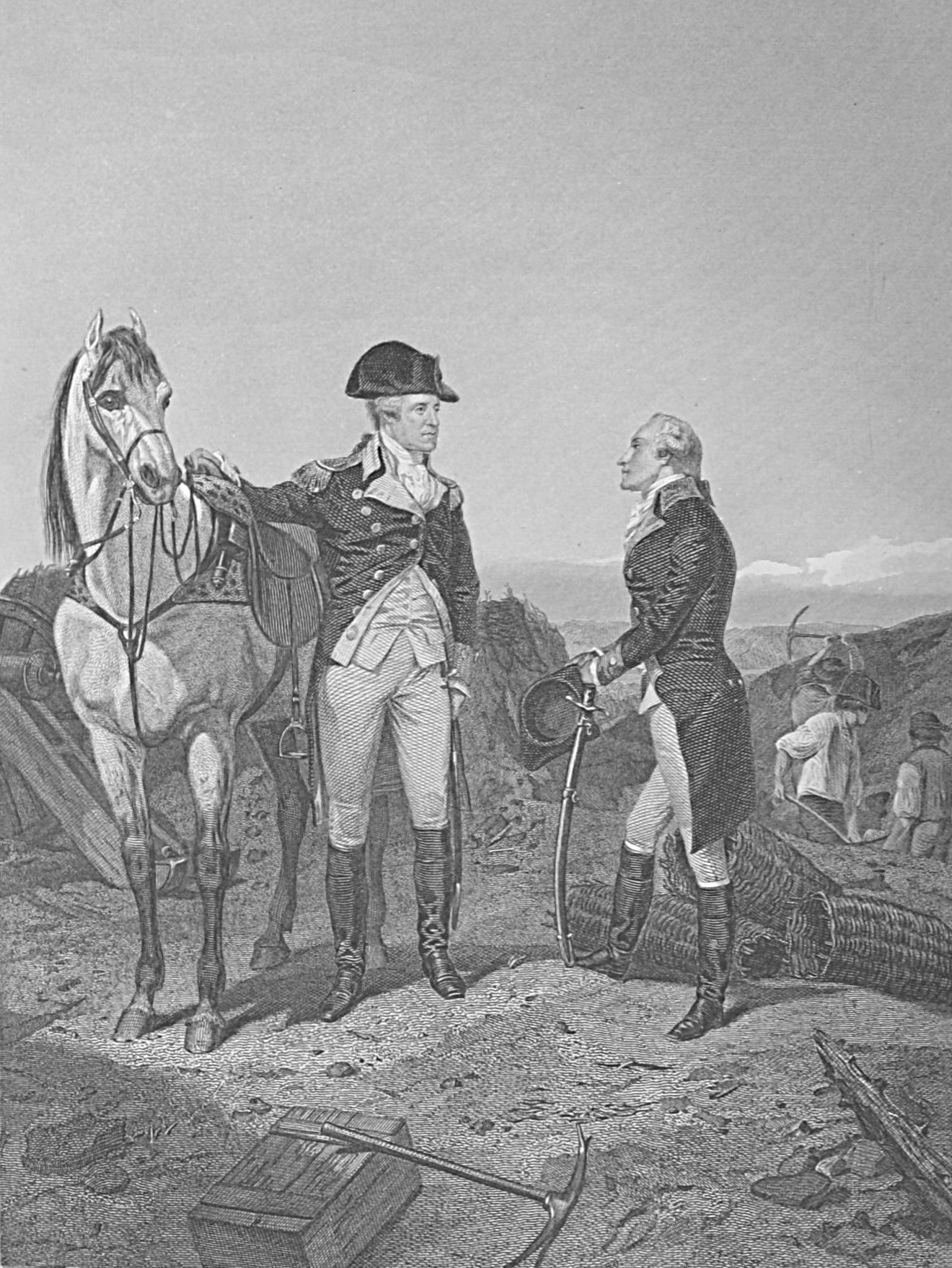
"First Meeting of Washington & Hamilton."
After the British victory at the Battle of Long Island on August 27, 1776, the Continental Army retreated across the East River and subsequently moved north on Manhattan Island, taking a defensive position at Harlem Heights. Alexander Hamilton was captain of a New York artillery company and, according to his son, it was at Harlem Heights while Hamilton was supervising the building of an entrenchment that Washington first noticed the young officer's organizational skills. As described in Life and Times of Washington, "While he was occupying this position [Harlem Heights], Washington paid much attention to the fortifying of his line by redoubts and intrenchments [sic]. In his rounds for the personal inspection of the works, he observed some which were constructed to an unusual degree of science and skill, and on inquiring for the engineer who had planned them, he was introduced to Alexander Hamilton, then a captain of artillery. Washington at once entered into conversation with this talented young officer, invited him to his marquee, and then and there commenced a life-long friendship, the results of which were not less important to the country than to themselves."
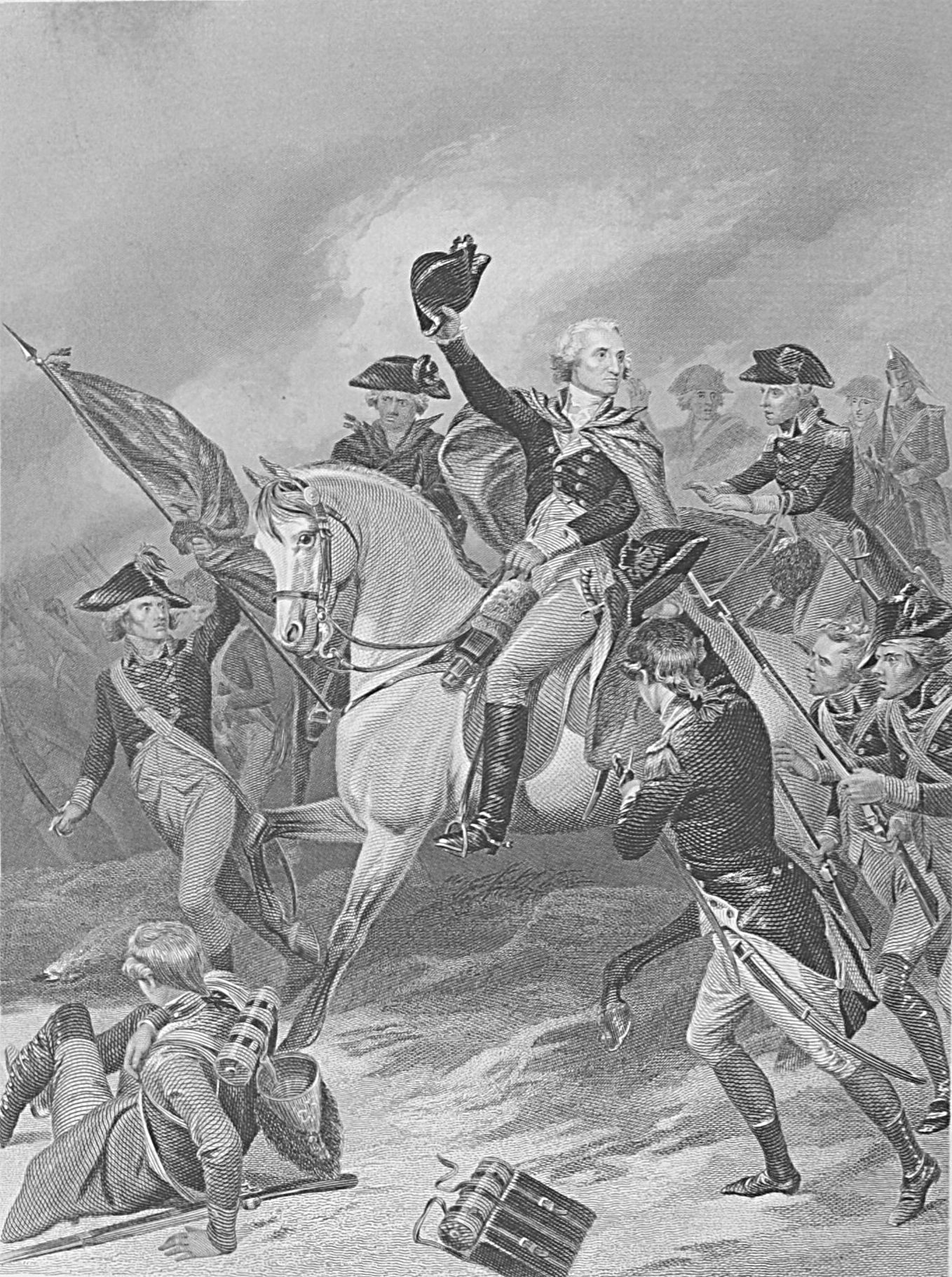
"Washington at the Battle of Princeton."
On January 3, 1777, the Continental Army attacked British forces at Princeton, New Jersey. British light infantry broke the American line, but Washington rallied his troops, personally directing the counterattack. At one point, he was exposed to fire from both sides but remained unscathed. The Americans swept the British from the field. As described in Life and Times of Washington, "Washington perceives the disorder and penetrates the fatal consequence of being vanquished. The present moment requires exertion to ward off the danger, however hazardous to his own person. He advances instantly; encourages his troops to make a stand; places himself between them and the British, distant from each other about thirty yards; reins his horse's head towards the front of the enemy; and boldly faces them while they discharge their pieces: their fire is immediately returned by the Americans, without their adverting to the position of the general, who is providentially preserved from being injured either by foe or friend."
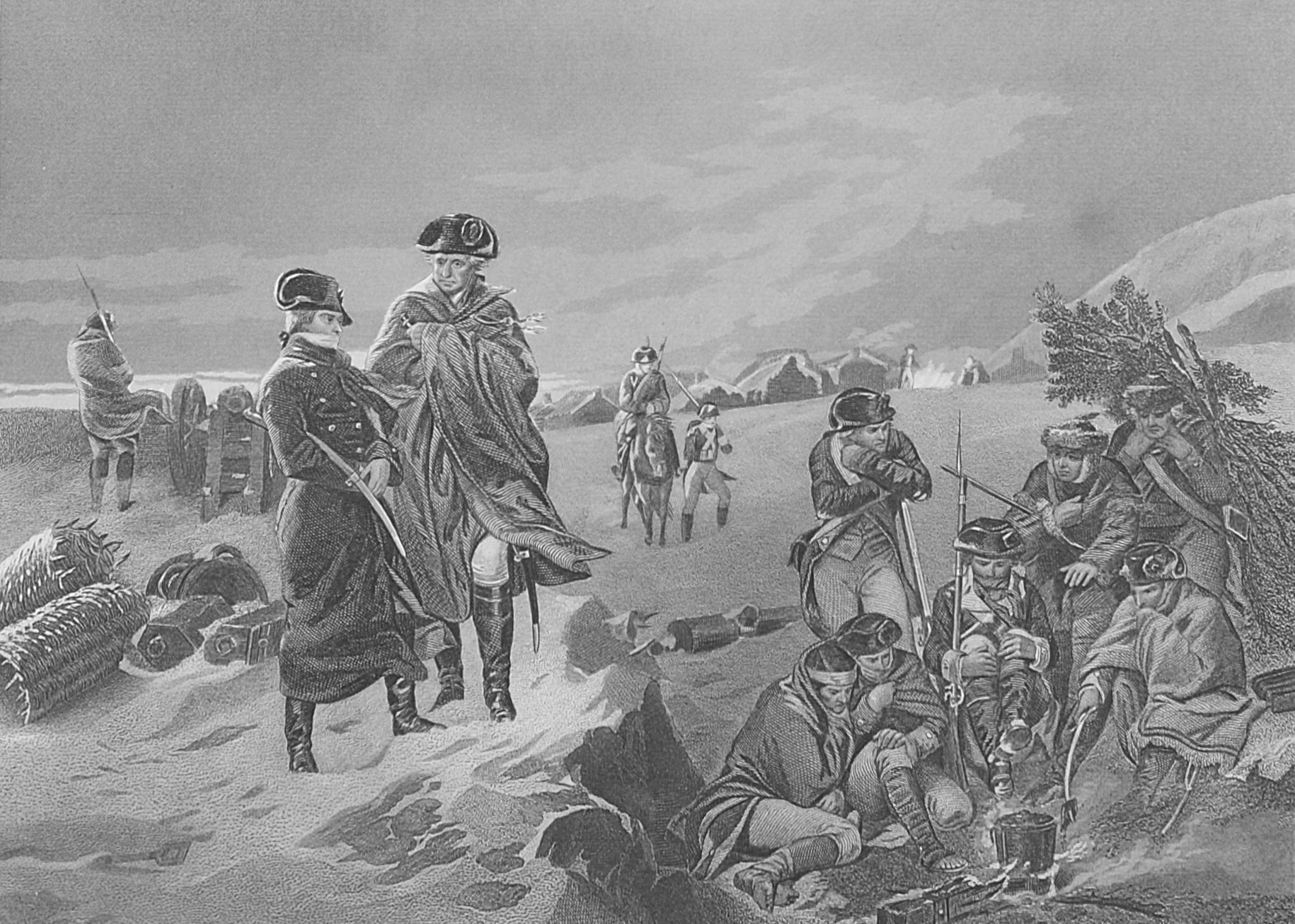
"Valley Forge -- Washington & Lafayette."
On December 19, 1777, the Continental Army moved into winter quarters at Valley Forge, Pennsylvania. The British had occupied Philadelphia after defeating the Americans at the Battle of Brandywine on September 11. The Marquis de Lafayette, who had arrived in America from France in June, was wounded in the leg at that battle. Washington attempted to strike back at British forces encamped at Germantown, seven miles northwest of Philadelphia. Again the British were victorious in the battle on October 4, but Washington and his army had surprised their opponents with the attack. By early November, the Continental Army was encamped northwest of Philadelphia at White Marsh. General Sir William Howe, in command of the British forces at Philadelphia, decided to attack Washington's position in early December. After a series of skirmishes, Howe withdrew his troops to the city for the winter and the Continental Army left White Marsh for Valley Forge. From Life and Times of Washington: "The return of Howe to Philadelphia without bringing on an action, after marching out with the avowed intention of fighting, is the best testimony of the respect which he felt for the talents of his adversary, and the courage of the troops he was to encounter. The cold was now becoming so intense that it was impossible for an army neither well-clothed, nor sufficiently supplied with blankets, longer to keep the field in tents....it was determined to take a strong position in the neighborhood of Philadelphia...and there to construct huts, in the form of a regular encampment, which might cover the army during the winter. A strong piece of ground at Valley Forge, on the west side of the Schuylkill, between twenty and thirty miles from Philadelphia, was selected for that purpose."
Sources:
Cyclopaedia of Biblical, Theological, and Ecclesiastical Literature, s.v. "Schroeder, John Frederick, D.D."
Bibliotheca Americana, A Dictionary of Books Relating to America from Its Discovery to the Present Time, s.v. "Schroeder (J.F.)."
https://www.alonzochappel.org/biography.html
https://www.cliohistory.org/visualizingamerica/picturingpast/part-two/singular-agendas/publisherjohnson
Category: History, Special Collections & Archives