
A History of the Mathematics Department
United States Naval Academy
Mathematics at the Core of Naval Education
The history of sailing the world’s oceans is, at its core, a mathematical story. From dead reckoning and astronomical navigation to today’s electronic charts, naval operations have always depended on mathematical precision. Since the founding of the Naval Academy in 1845, mathematics has been at the heart of an officer’s education. Every midshipman—regardless of major—studies mathematics. As the Academy’s largest academic department, we ensure that all graduates carry the analytical foundation needed for leadership in an increasingly technical Navy and world.
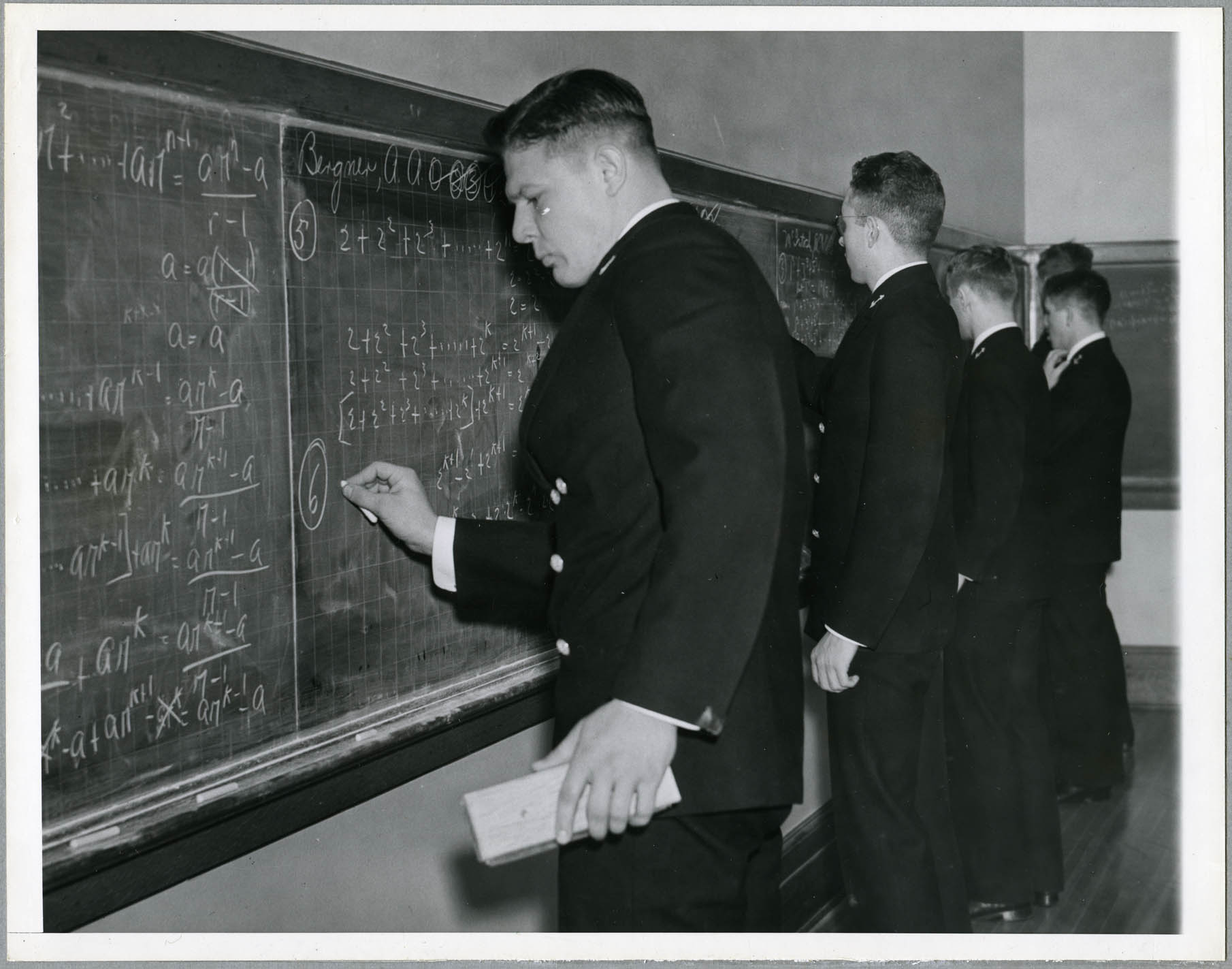
Prior to the founding of the Naval Academy, Midshipmen in the early 1800s studied mathematics and navigation aboard ships, usually taught by chaplains. In 1813 civilian schoolmasters were introduced to the education of midshipmen, emphasizing navigation and mathematics. During the 1830s and 1840s this education evolved into “cram schools” operating out of three Navy yards and starting in 1938. Midshipmen nearing promotion received an eight-month course of instruction at the naval school in Philadelphia, which included instruction in algebra, geometry, and trigonometry. William Chauvenet was hired in 1841. William Chauvenet, a Yale-trained mathematician, recognized the need to expand midshipmen education, leading to him improving the Philadelphia school and drafting plans that became the Naval Academy.
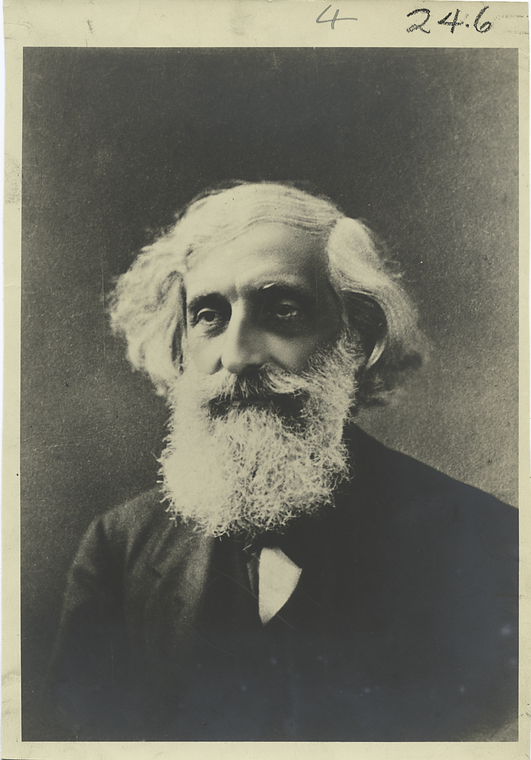
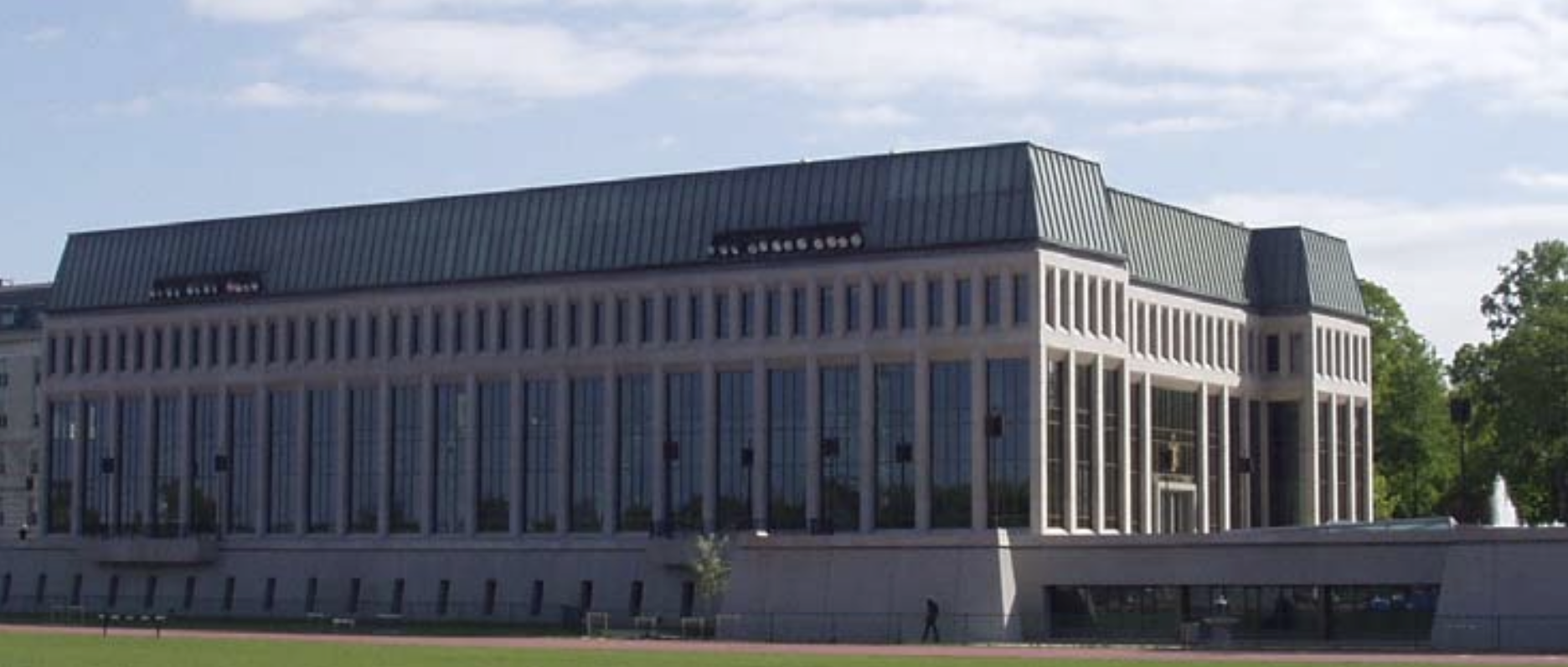
Chauvenet’s influence on the early Naval Academy placed mathematics front and center. The curriculum was expanded to include descriptive and analytic geometry, as well as calculus. The 1850 reorganization of the Academy established mathematics as one of the six original departments. Beyond design and organization of the new school, Chauvenet’s textbooks, such as Treatise on Plane and Spherical Trigonometry, became widely used across U.S. colleges. William Chauvenet would later serve as the chancellor of Washington University in St. Louis. He is also the namesake of Chauvenet Hall (dedicated 1969), the modern home of the USNA mathematics department, and he is the inspiration for the Mathematical Association of America’s Chauvenet Prize. Admiral S.R. Franklin proclaimed William Chauvenet the “Father of the Naval Academy” in an 1890 recognition of Chauvenet’s contributions.
Growth, Challenges, and Transitions
The United States’ civil war prompted relocation of the Naval Academy to Newport, Rhode Island. While this transition inevitably caused program disruptions, mathematics instruction remained essential. The latter half of the 19th century saw fluctuation in mathematics instruction, with calculus temporarily removed by the 1870s as instruction shifted toward officer-led teaching. This was followed by the return of calculus in 1899 as the program experienced expansion in both rigor and scope. In 1907 the department was renamed “Mathematics and Mechanics” and the faculty was expanded to include professional mathematicians and textbook authors. This expansion continued during the world wars as civilians with Ph.Ds were recruited in large numbers and math became fully professionalized. The mid-1900s were the golden era of midshipmen using the slide rule, a hand operated mechanical calculator. The proliferation of affordable handheld calculators in the mid-1970s marked the end of the slide rule era as a standard tool for computation.
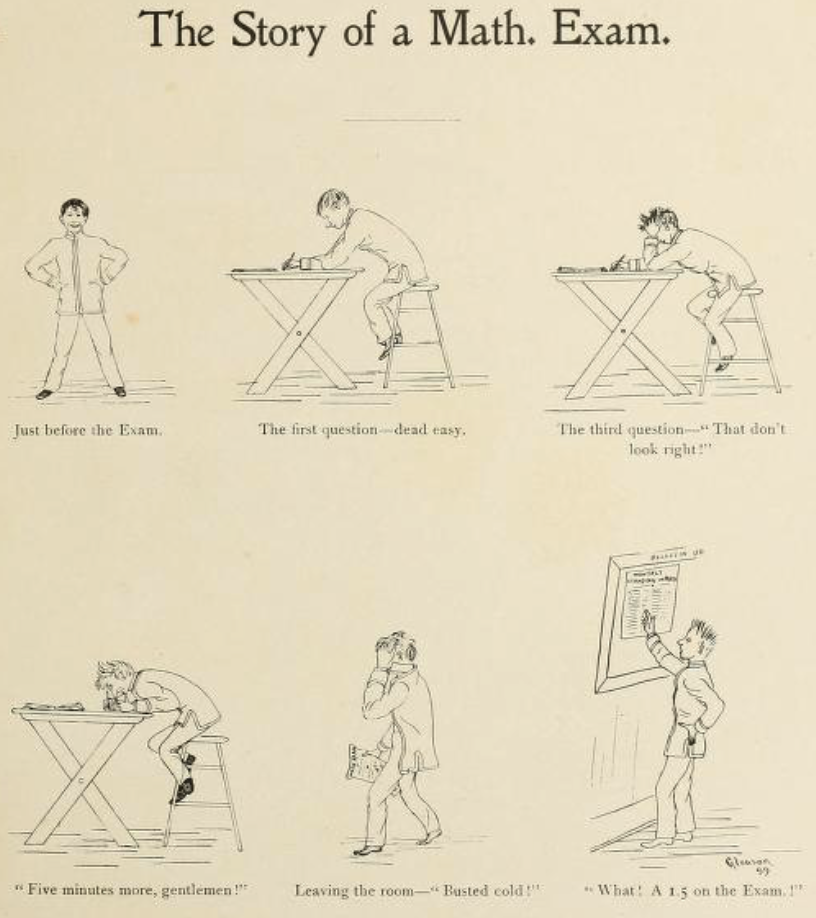
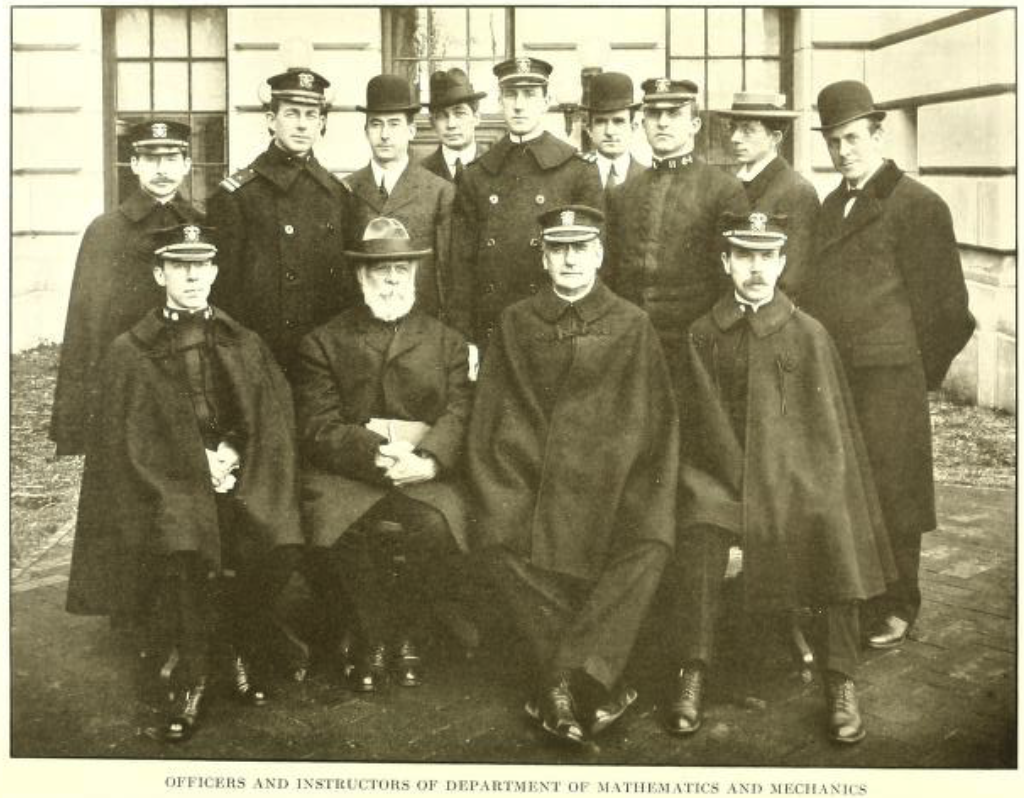
Beyond the transition from slide rules to calculators, modernization continued through the latter half of the 20th century. The 1950s and 1960s saw increased recognition as math not just as a tool, but as a standalone science. At the request of the department in 1960, the Naval Academy approved “mathematics” as a major. This advancement led the way for two 1968 events: the introduction of probability and statistics as a capstone course and the department moving into the newly constructed Chauvenet Hall. From the 1970s until the contemporary era, civilian PhD mathematicians were appointed as department chairs. Concurrently, the department expanded with pure math, applied math, and operations research majors.
Today: The Academy’s Largest Academic Department
Today the math department is home to over 60 professors, both civilian and military. Every midshipman completes core mathematics instruction in calculus I, calculus II, and calculus III, with many majors, both those inside and outside of the math department, requiring additional mathematics instruction. Small class sizes, averaging 18 students per instructor, help facilitate successful mathematics instruction for midshipmen. The department offers research opportunities for midshipmen, while advanced electives prepare future officers for the challenges of modern naval warfare. Department faculty are active scholars, textbook authors, and national leaders in mathematics education. Mathematics has always been, and remains, foundational to the education of naval officers.
Featured Figures
- William Chauvenet (1820–1870): “Father of the Naval Academy,” first head of the Department of Mathematics, namesake of Chauvenet Hall.
- Stimson Brown (1854–1929): Head of Department in early 20th century, author of influential naval mathematics texts.
- Woolsey Johnson (1841–1927), James Scarborough (1908-1966): Faculty authors whose textbooks shaped American mathematics education.
This history is produced, in part, from the following sources:
- A Brief History of the Department of Mathematics by Prof. T. J. Benac (PDF)
- William Chauvenet (PDF)
- USNA Publications: The Lucky Bag
